
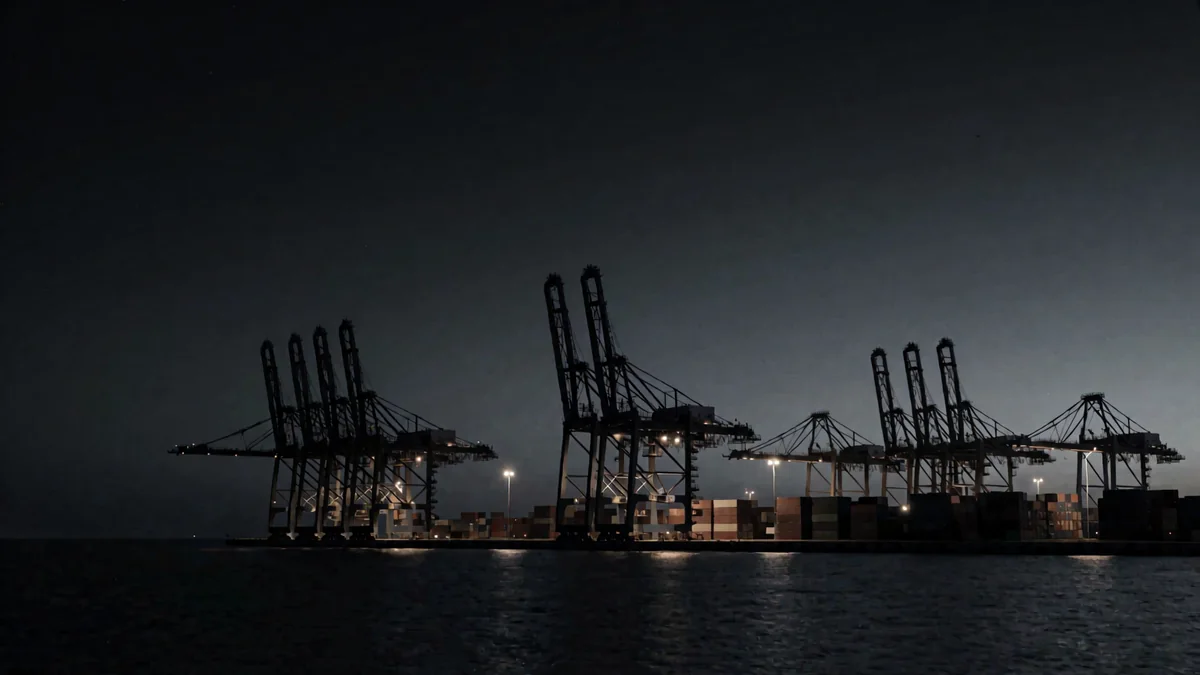
Colima is small in territory and huge in freight traffic: the port of Manzanillo, the most important on the Mexican Pacific, sends thousands of containers a day to Guadalajara and the Bajío on motorway 54D and Highway 200 towards Jalisco and Michoacán. The capital and Villa de Álvarez, Tecomán and Manzanillo concentrate the vehicle fleet, and tractor units from other states are part of the landscape. Urban infractions are issued by the municipal transit offices, and those on state roads by the state police; debts are collected with the state renewal.
Context and authorities
The framework is the entity’s traffic regulation and, on federal roads, the federal regulation: fines are expressed as multiples of the Unidad de Medida y Actualización (UMA) and collected as tax credits, with late surcharges. Many vehicle procedures, such as emissions verification or plate renewal, require having no pending infractions. Institutional information is on the Colima Government portal.
Manzanillo, Colima and Tecomán have their own transit office and treasury, with permanent freight operations at the port approaches; the state police covers the state highways and the National Guard motorway 54D and federal Highway 200. The state planning and finance secretariat adds vehicle debts to the renewal and to plate procedures.
What the API returns for this entity
In Colima a plate is sent to the Mexico fines API, which walks its integrated sources and returns each infraction with the authority that recorded it:
- The authority that recorded the infraction and its folio, unnormalised.
- The date and reason, with the location if the source reports it.
- The amount and status current at the source, with the discounts it publishes.
- The payment reference when the authority offers one.
- Which sources answered and which did not, to tell a complete result from a partial one.
How to check a plate in Colima
A plate is checked by hand at the Colima Government portal and, for the vehicle’s identity, at the REPUVE. The API does the same round at scale and returns each infraction with the authority that recorded it, so verification becomes part of the fleet process rather than a spreadsheet.
What to watch if you run a fleet in Colima
A container transport fleet based in Guadalajara descends to Manzanillo several times a week and piles up municipal infractions at the port approaches and state ones on the highway, on tractor units rotating between operators; looking up each plate at month end, with the result stored per authority, lets you assign them to the trip’s operator while the waybill exists.
For a customs agency or a carrier with units registered in Colima, the plate lookup before each renewal prevents a forgotten debt from leaving a tractor unit idle at the port compound.
How to integrate
A lookup is a POST with the plate and, optionally, the entities to include; the initial response accepts the job and the result arrives by status lookup or webhook, because official sources answer in seconds or minutes. The asynchronous APIs guide explains how to retry without duplicating work and the API page details access.
{
  "plate": "ABC123A",
  "jurisdictions": [
    "MX-COL"
  ]
}
Limits and considerations
- Infractions on federal highways are issued by the National Guard and paid separately from state debts.
- UMA amounts are updated every year; the final amount is set by the authority at the time of payment.
- A source that does not answer is reported as such, never as an absence of infractions.
- The API neither pays fines nor handles clarifications; it delivers information to decide.