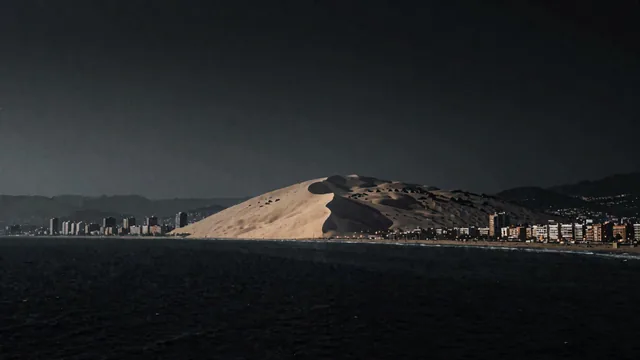


The Arica and Parinacota Region is Chile’s far north: Arica and its port serve Bolivia’s trade, which descends Route 11 from the altiplano and the Chungará pass, and the border with Peru on Route 5 and the Chacalluta complex, minutes from Tacna. Bolivian trucks, Peruvian cars and high-altitude tourism share streets and routes with the city. Each comuna has its local police court, Carabineros issues fines on the routes and the cameras register by plate in the Civil Registry.
Context and authorities
Each comuna has its local police court, which applies Law 18.290 and sets fines in monthly tax units; discounted payment exists at many courts within the period of the summons. Registered fines, those that identify the vehicle by its plate and not the driver, are entered in the Register of Unpaid Fines and show up when renewing the circulation permit or transferring the vehicle.
The Arica local police court rules on most of the region’s fines, with parking enforcement downtown and load checks at the port approaches; Carabineros issues speeding and documentation fines on Route 11 and on Route 5 towards the border. Fines on Peruvian and Bolivian vehicles are issued on the spot and registered ones block the circulation permit until they are paid.
What the API returns for this jurisdiction
In the Arica and Parinacota Region a plate lookup walks the integrated sources of the Chile fines API and returns each fine with the court or authority that recorded it, as the source publishes it:
- Court or authority and case number or fine number exactly as the source publishes them.
- Date, comuna and article infringed when the source reports it.
- Amount in tax units and pesos, with the current status.
- Coverage per source and a partial-result flag when any failed to answer.
How to check a plate in the Arica and Parinacota Region
Manual verification starts at the Civil Registry’s Register of Unpaid Fines, which concentrates the registered fines of the whole country, and continues at the local police court of the comuna for those that summon the driver. That round, repeated for every unit, is what the API replaces: one lookup per plate across the integrated sources, with the result per source.
What to watch if you run a fleet in the Arica and Parinacota Region
A Bolivian or Chilean freight company running Route 11 between the port and the altiplano piles up Carabineros fines and Arica court fines on trucks rotating between drivers; looking up each plate at month end, with the result stored per authority, lets you assign them to the trip’s driver.
For a rent-a-car in Arica delivering cars to visitors from Tacna, the plate lookup at the return of each rental charges the customer the parking fine that would otherwise be registered against the company.
How to integrate
The integration starts with one POST per vehicle, with the jurisdiction as an optional filter. Since sources answer at their own pace, the API accepts the job and delivers the result by status or webhook; store the idempotency key before sending, as the asynchronous APIs guide describes. The API page details limits and fields.
{
  "plate": "BBBB10",
  "jurisdictions": [
    "CL-AP"
  ]
}
Limits and considerations
- Fines with a summons to the driver are processed at the corresponding local police court and are not always entered in the plate register.
- Amounts in monthly tax units are converted at the value of the month of payment; the final amount is set by the court.
- A source that does not answer is reported as such, never as an absence of fines.
- The API neither pays fines nor files defences; it delivers information to decide.